

https://www.unigoa.ac.in/faculty/venkatesha-r-hathwar.html
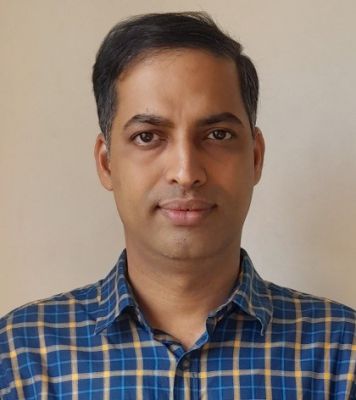
Venkatesha R. Hathwar is a UGC-Assistant Professor and Programme Director of Physics in the School of Physical and Applied Sciences at Goa University, India. He completed his Ph.D. at the Indian Institute of Science, Bangalore, with T. N. Guru Row in 2011. It was followed by two postdoctoral research positions at the University of Augsburg, Germany, with Wolfgang Scherer, and at Aarhus University, Denmark with Bo B. Iversen. Prior to joining Goa University in 2018, he was an Assistant Professor at the University of Tsukuba, Japan, with Eiji Nishibori.
His current research interests include the synthesis of multifunctional materials, quantum crystallographic studies and crystal engineering. He has expertise in single-crystal and powder X-ray diffraction, neutron and synchrotron diffraction and electron density analysis using high-resolution X-ray data. He is presently applying this expertise to the study of photoluminescent and photocatalytic materials, phase transitions, and hybrid halide perovskites for energy applications. He also has expertise in the analysis of weak intermolecular interactions and structure–property correlations using quantum crystallographic methods.
He is also the recipient of the AsCA Rising Star Award from the Asian Crystallographic Association. He is currently a co-editor of the Journal of Applied Crystallography (IUCr, Chester) and a deputy coordinator of the Materials Characterization Laboratory (MCL) at Goa University.
Lecture 54: Venkatesha R. Hathwar
Quantifying Weak Interactions in Organic and Hybrid Solids to Understand the Structure-Property Correlations
Venkatesha R. Hathwar
School of Physical and Applied Sciences, Goa University, Taleigao Plateau, Goa - 403206, India
vhathwar@unigoa.ac.in
Abstract:
Supramolecular chemistry and crystal engineering focus on a wide range of strong and weak intermolecular interactions, such as hydrogen bonding, halogen bonding, and van der Waals interactions, to design multifunctional materials. Both intra- and intermolecular interactions play a crucial role in determining molecular conformations, crystal packing, and resulting properties. A detailed understanding of the strength and nature of weak interactions is therefore essential for tuning interactions between preselected building blocks in molecular assemblies. Electron density is arguably the most information-rich observable, and it can be determined from XRD experiments. The electron density distribution obtained from high-resolution XRD could be used to estimate the chemical and physical properties of materials. Modern quantum crystallography (QCr) methods have emerged as reliable tools for elucidating the nature of chemical bonding. In my presentation, I will discuss our work on the application of QCr to the study of a variety of weak interactions in pharmaceutical APIs and organic semiconductors. In particular, the structural phase transitions in organic cocrystals and hybrid halide perovskites are also investigated to correlate observed physical properties with underlying weak interactions.
References:
1. Jakhi, S. J.; Dhanetwal, M.; Reddy, V. R.; Hathwar, V. R. Acta Cryst. 2025, B81, 363-372.
2. Mandal, K.; Hasija, A.; Shukla,R.; Hathwar, V. R.; Chopra, D. Phys. Chem. Chem. Phys. 2023, 25, 19427-19434.
3. Anilkumar, G. N.; Hathwar, V. R. Acta Cryst. 2023, B79, 450-461.
4. Anilkumar, G. N.; Hathwar, V. R. Chemistry Select 2022, 7, e202104338.
5. Hathwar, V. R.; Bhowal, R.; Chopra, D. J. Mol. Stru. 2020, 1208, 127864.
6. Hathwar, V. R., Thomsen, M. K., Mamakhel, A. H., Filso, M. O., Overgaard, J., Iversen, B. J. Phys. Chem. A 2016, 120, 7510−7518.
7. Hathwar, V. R., Sist, M., Jørgensen, M. R. V., Mamakhel, A. H., Wang, X., Hoffman, C., Sugimoto, K., Overgaard, J., Iversen, B. IUCrJ 2015, 2, 563-574.